What Christmas Still Invites Us to Become
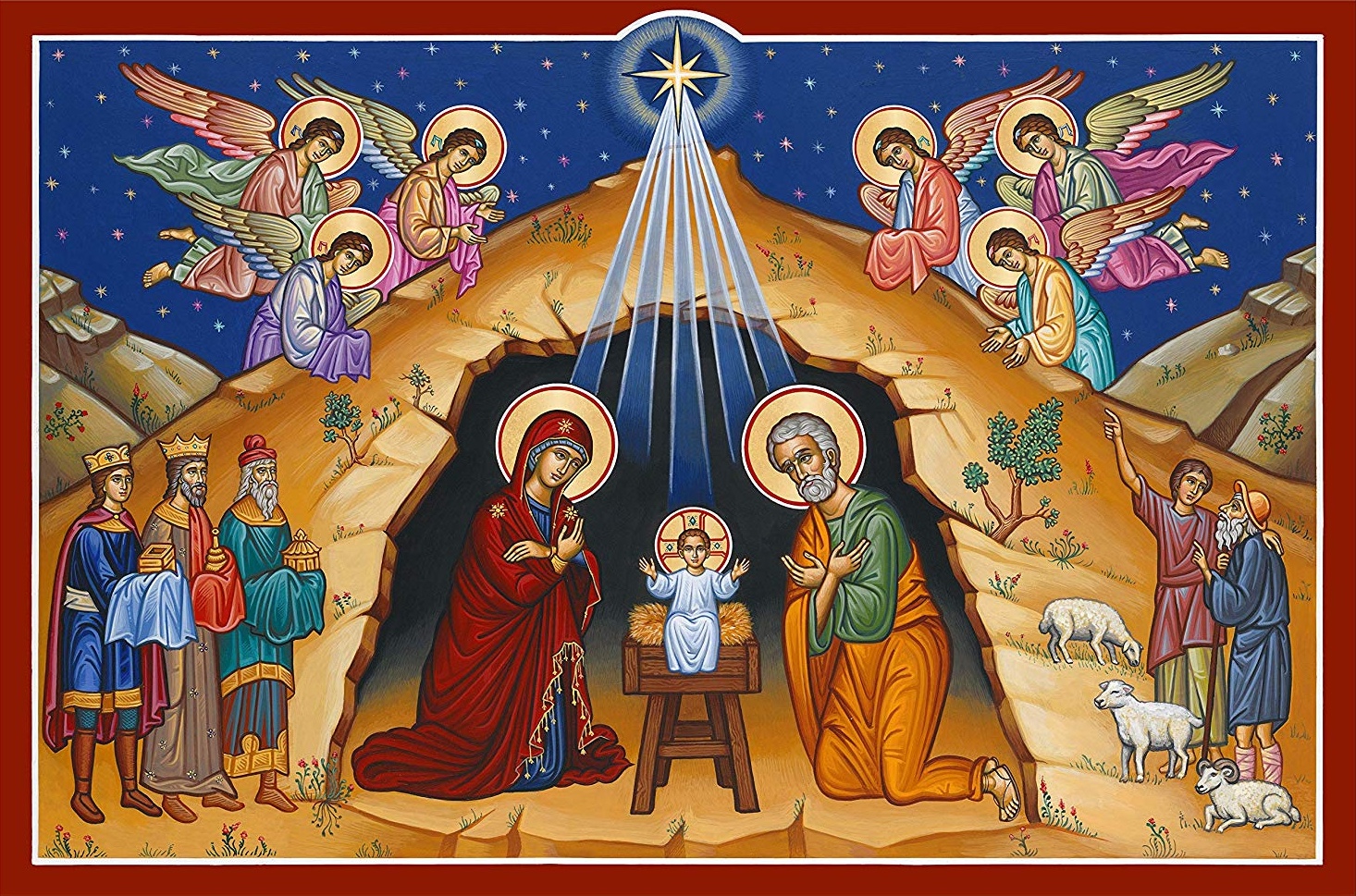
As we approach Christmas, millions of people around the world will gather, some in churches, some in living rooms, some simply around a shared table. Candles will be lit. Familiar songs will be sung. For many, this season carries deep spiritual meaning. For others, it holds emotional weight: a pause, a memory, a longing for something gentler than the rest of the year.
At the heart of Christmas is the celebration of the birth of Jesus Christ. A figure revered by Christians as the embodiment of love, humility, sacrifice, and moral courage. Whatever one’s beliefs, it’s difficult to deny the influence of his life and message. Few individuals in history have shaped human values, ethics, and imagination as profoundly.
Christmas matters. Not just religiously…but humanly.
How Christmas Found Its Date
It’s also true that the Christmas we celebrate today took shape within a specific historical context. When Christianity emerged from persecution and became woven into the Roman Empire, it didn’t develop in isolation. December 25th already carried symbolic meaning in the ancient world, closely associated with the return of light after the winter solstice. The darkest days were behind us. The sun was coming back.
Rather than erasing those earlier meanings, early Christianity translated them. Light became a metaphor not just for the sun, but for hope. Renewal became spiritual as well as seasonal. Sunday, the day of the sun, became a day of worship. This wasn’t a trick or a theft; it was a recognition that symbols endure because they speak to something timeless in us.
The calendar mattered less than the meaning.
A Story Humanity Keeps Telling
When you step back far enough, a deeper pattern emerges, one that predates Christianity and extends well beyond it.
Across cultures and centuries, humans have told remarkably similar stories:
– A figure of compassion enters a suffering world.
– Darkness gives way to light.
– Sacrifice leads to renewal.
– Love proves stronger than death.
These stories appear in different forms, with different names and imagery, but they point in the same direction. Long before Christianity, cultures spoke of figures like Attis, associated with death and rebirth; Krishna, a divine embodiment of love and moral order; Dionysus, a teacher of transformation and renewal; Mithras, a symbol of light, truth, and cosmic order; and Horus, the ancient Egyptian god whose story of death, resurrection, and divine sonship symbolized the triumph of order and light over chaos.
The details vary, as they should. Cultures are not carbon copies of one another. But the attributes recur. Again and again, humanity returns to the same intuition: that compassion redeems, that light matters, that transformation is possible.
Those figures don’t diminish Jesus. They contextualize him.
From the Man to the Meaning
Here’s the question Christmas quietly asks us each year, often beneath the noise of shopping lists and social obligations:
What if the enduring power of Christmas isn’t only about who Jesus was, but about what he embodied?
Jesus didn’t invent compassion. He lived it. He modelled a way of being that refused hierarchy, rejected exclusion, and placed love at the center of human life. He didn’t ask people to admire him from a distance; he invited them to follow…to practice what he practiced.
That distinction matters.
When belief becomes more important than behaviour, the message gets lost. But when the focus shifts to embodiment, to how we treat one another, the story comes alive again.
Christ Consciousness, Simply Put
This is where the idea of Christ Consciousness (the non-denominational Christos) enters, not as doctrine, definitely not as dogma, but as orientation.
Christ Consciousness is the practice of radical empathy.
It’s seeing the other not as an opponent, but as an extension of yourself.
It’s choosing love over fear, understanding over certainty, compassion over control.
You don’t need to be Christian to recognize it.
You don’t need to abandon Christianity to live it.
You don’t need to believe anything at all, only to practice something.
In that sense, Christ Consciousness isn’t owned by a religion. It’s expressed through behaviour: forgiveness instead of retaliation, generosity instead of scarcity, presence instead of performance.
Christ Consciousness shows up in how we speak to our partners, how we listen to our children, how we disagree with those who see the world differently.
A Glimpse of the Nous Age
Some thinkers have begun to describe this widening awareness as part of what I’ve called The Nous Age, a shift toward seeing ourselves not as isolated individuals, but as one knowing people.
“Nous” speaks to shared understanding, collective intelligence, and a deeper kind of awareness. In this way of thinking, wisdom doesn’t belong to one tradition or religious tribe. It emerges wherever humans choose connection over division.
The Nous Age doesn’t ask us to discard the past. It asks us to integrate it, to recognize that the truths we’ve been circling for thousands of years may finally be asking us to live them.
How We Might Celebrate Christmas Now
So what does all of this mean for Christmas?
Perhaps it means we celebrate the birth of Jesus and the consciousness he modelled.
Perhaps it means honouring tradition without clinging to exclusivity.
Perhaps it means letting Christmas remind us, at least once a year, of who we are capable of being.
Light still returns after darkness.
Compassion still heals what fear breaks.
Love is still a practice.
If Christmas points to anything enduring, it’s this: the invitation to embody what we claim to believe.
And in a world that feels increasingly fragmented, that invitation has never been more relevant, or more needed.

 The Nous Age