When the Faders Come Up


Years ago, I was talking with a sound engineer I knew about the art of mixing music.

He told me a story that has stayed with me ever since, and it is beginning to make sense in today’s geopolitical climate.

He was asked to mix a multitrack recording of a blues band. He instantly regretted saying yes when he began soloing the individual tracks.

The vocal sounded rough, almost painful.
The bass felt sloppy and uncertain.
The drums weren’t particularly tight.

If you heard any one of them alone, you might have thought, This isn’t going to work.

Then he brought all the faders up together.

What came out of the speakers was glorious.

It was emotional.
It was cohesive.
It was alive.

The band didn’t sound broken.
It sounded human.

And somehow, in the blend, all the rough edges found their place.

That was his lesson.

Stop obsessing over every isolated imperfection.
Start listening to the whole.

Where We Are

We live in a world that’s forgotten how to do that.

We are constantly soloing tracks.

We solo countries.
We solo cultures.
We solo identities.
We solo headlines.

And when we do, we hear flaws.

We hear distortion.
We hear imbalance.
We hear things that feel unfinished.

But nothing in the world was ever meant to be heard in isolation.

No single instrument carries the song.
No single nation carries humanity.

The music only emerges when the faders come up together.

The Deeper Truth

There is a deeper truth here.

When you solo a track long enough, you stop hearing music.
You start hearing imperfections.

That’s where we are culturally.

We magnify differences.
We amplify mistakes.
We critique endlessly.

It’s as if we believe that if we just tune every instrument perfectly in isolation, harmony will automatically appear.

But that isn’t how music works.

And it isn’t how civilization works either.

Perfection Is the Enemy

In mixing, perfection is often the enemy of life.

Over-tune the vocal and you lose its soul.
Over-quantize the drums and you lose the groove.
Over-compress the track and you lose the breath.

Sometimes what sounds flawed alone is what makes the whole feel real.

The slight rasp in the voice becomes emotion.
The looseness in the rhythm becomes feel.
The friction becomes energy.

Difference, in context, becomes beauty.

What We Need

The Nous Age, will not be an age of uniformity.

It will be an age of conscious blending.

An age where we understand that humanity is not a solo performance.
It is an ensemble.

No culture needs to disappear for the music to work.
No nation needs to be erased for harmony to exist.
No identity needs to be tuned into sameness.

What we need is balance.

We need listening.

We need perspective.

We need to hear the whole before we judge the parts.

It’s In the Mix

Think about it.

A single neuron doesn’t think.
A single note doesn’t move us.
A single voice doesn’t create a civilization.

But networks do.
Ensembles do.
Interconnection does.

The miracle is not in the track.

It’s in the mix.

Shift the Focus

Maybe the work of this century is not to fix every isolated imperfection.

Maybe it is to raise the faders together.

To widen the frame.
To shift from critique to context.
To hear humanity not as fragments, but as an emerging composition.

Because when you listen to the whole, something changes.

You begin to hear coherence where before you heard chaos.
You begin to feel belonging where before you felt division.
You begin to sense that the music was always there.

We just weren’t listening properly.

Is Anything “Wrong”

The Nous Age begins the moment we stop asking,
“What’s wrong with this track?”

And start asking,

“What happens when we let the ensemble play?”

And then — bravely —
we bring the faders up.

INTERVIEW: Graham Hancock Speaks Out


Graham-Hancock

Graham Hancock is one of the most eminent researcher-writers on true world history. His book Fingerprints of the Gods verified my suspicion [1] that we are not the world’s first great civilization and helped propel me down a new path in my journey. He has also become an outspoken proponent of the use of Ayahuasca as a way to open the mind and expand the consciousness.

When William Henry announced that Graham would be speaking at the Revelations Symposium in Nashville, I signed up and booked my flight.

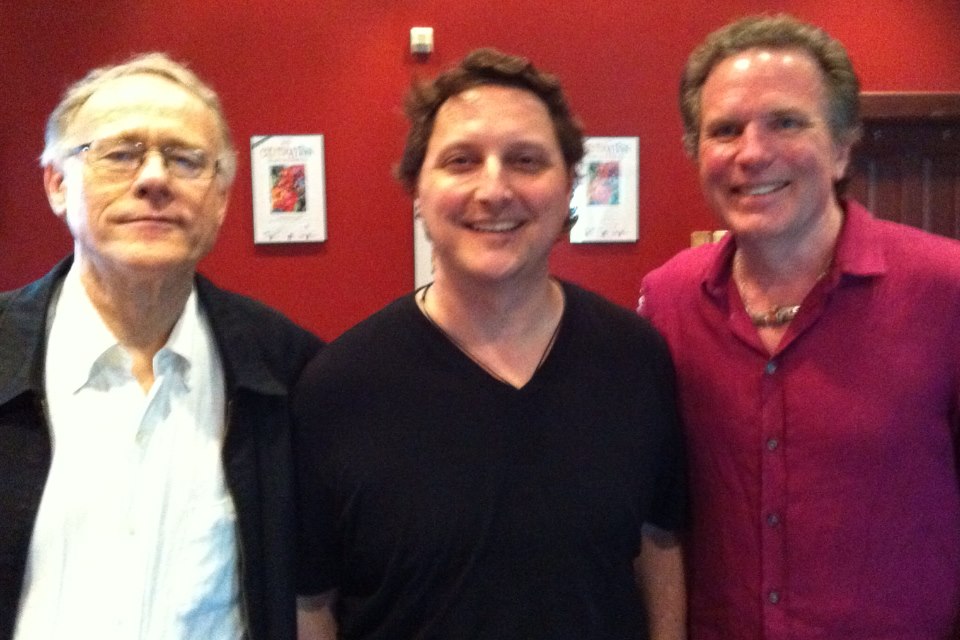
Graham Hancock, David Boullata and William Henry

Graham Hancock, David Boullata and William Henry (l-r)

We spent 3 days in the intimate beauty of the Scarritt-Bennett Center listening and learning from Graham, William and Whitley Strieber. Then as the chairs were being folded and with only minutes before leaving for the airport, he graciously agreed to sit down with me and field a few questions:

1. In regards to your first book The Sign & the Seal do you think we should insist on examination of the artifact at Axum? Would we ever be allowed?

2. In Fingerprints of the Gods you proved that we know a lot less than we think we know about the history of mankind on Earth. What for you is the critical information that needs to be taught to our kids, to the general population…and how will that change the way we see ourselves today?

3. I find Zecharia Sitchin’s research intriguing but I’m not totally convinced. How much credence do you hold to the idea that we may have been genetically modified slaves of an advanced alien species?

4. According to Israeli archeologists Amnon Ben-Tor and Sharon Zuckerman there is no physical evidence for The Exodus as told in The Bible [2] (click ‘transcript’)…suggesting that perhaps the Ark of the Covenant didn’t come from Egypt but was already in Jerusalem. Might the Ark hold a crucial piece of Zecharia Sitchin’s alien landing beacon?

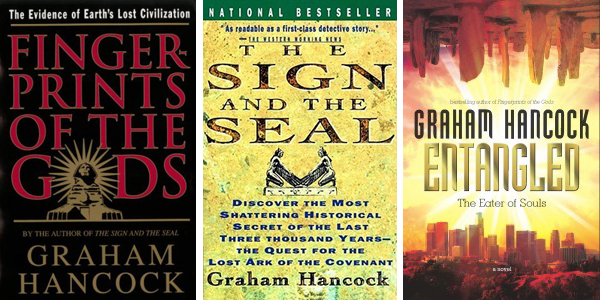
Hancock-Books

5. Why did you decide that writing fiction would be an appropriate move for your writing career?

6. In Entangled, you introduce the idea of magic mushrooms, what The Clan call “Demon Penises” and the Uglies call “Little Teachers”. Is psilocybin a hallucinogen or a key to open a door to another dimension?

7. What do you think the role of psychedelics were in ancient civilizations…and how do you think they can help our modern, disjointed world?

8. What if anything do you think will come of the TEDx Talks controversy? A more open discussion on “what is science”….?

9. Are you a spiritual anarchist?

10. Who or what is God?

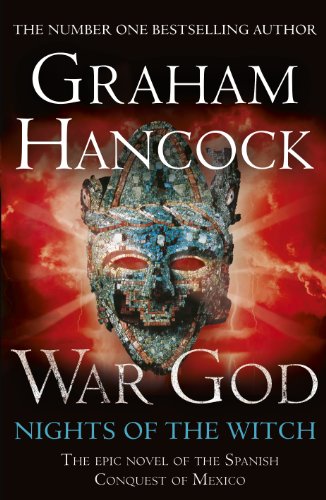
Graham Hancock’s new book War God will be available through Amazon UK on May 30th and later this year through Amazon Canada on August 13. You can likewise read a few sample chapters for free at the website War-God.com


For an updated list of Graham’s speaking engagements around the world click here.


Interview: Stephen S. Mehler


Stephen-S-Mehler

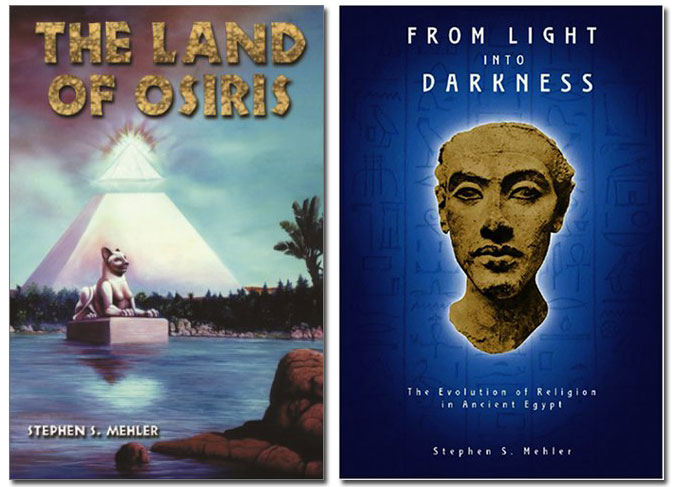
EARLIER THIS WEEK I had the opportunity to speak via Skype with Stephen S. Mehler, the author of The Land of Osiris and From Light into Darkness. He is one of the authors who inspired me to take my exploration of consciousness studies back in time to see if I could augment my understanding on the subject. I was looking for clues to what these ancient civilizations may have already known:

1. Who were the Khemitians?

2. What do we know about their religion…or spiritual beliefs?

3. Where the Hebrews from Khemit or from a previous civilization?

4. How are the Sufi connected to Khemit?

4a. Have the Sufi been able to stay true to their traditions or have they bent to modern Islam?

Stephan S. Mehler & Abd’El Hakim Awyan

Stephen S. Mehler & Abd’El Hakim Awyan

5. How old are the pyramids at Giza…and how can you be sure?

6. Who built the pyramids at Giza?

7. What is the Ur Nil (or Protonile) and what is it’s significance to the pyramid complex at Giza?

8. In your book “The Land of Osiris” you introduce Victor Schauberger’s theory that in the union of hydrogen and oxygen to form water a great deal of potential “energy” was stored. Could the pyramids have been used to tap into this energy?

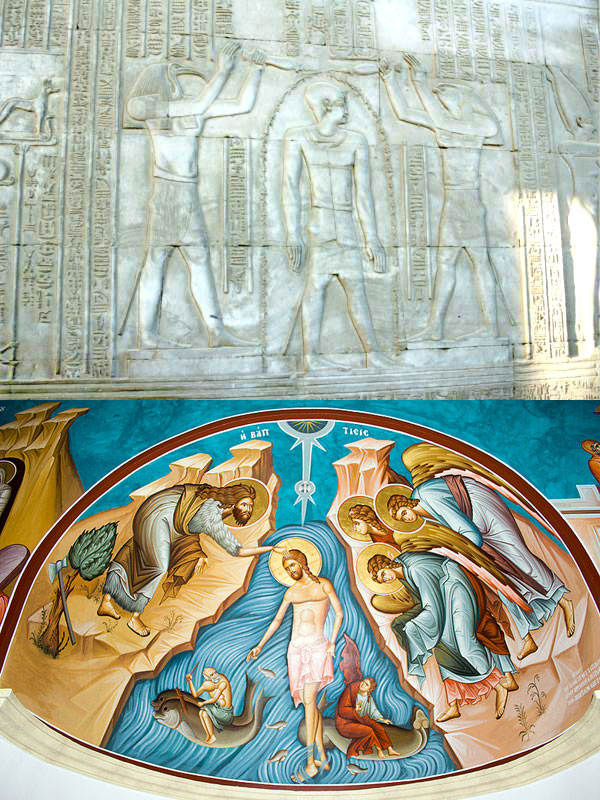
9. In my book I hope to draw a comparison between the imagery of Horus being anointed with water by Thoth and the Baptism of Jesus (see picture below). The dove appearing over Jesus’ head is not simply “holy spirit” but a representation of a Khemitian-like advanced state of awareness/consciousness…and that the purpose of the icon is as a do-it-yourself guide. What are your thoughts on that idea?

10. Do you feel we have been mislead (on purpose or not) about the history of our planet?

My feeling is that there is a lot we can learn from looking into the past while we forge ahead with new scientific discovery. What we are learning today may have been already known, we need to find the clues that may be in plain sight.

Your comments and questions are invited below.

Horus being anointed with water by Thoth (above) - The Baptism of Jesus

Horus being anointed with water by Thoth (top) – The Baptism of Jesus

The Essence of a Cup


empty-cup

I’VE COME TO UNDERSTAND that the essence of a cup is not the cup itself, it is the space within the cup. It’s the space that defines it’s purpose…to hold something without form.

Likewise, I believe the essence of the Universe’s smallest particles is not it’s electrons, protons, neutrons, etc. Their essence, indeed their purpose has to do with the space within them.

It’s About Space
If we consider the atom is 99.99% empty space perhaps we would see that our research at CERN is looking in the wrong place to find the so-called God Particle known to scientists as the Higgs boson. And that perhaps the God Particle isn’t even a particle at all!

Ask the Right Question
As a thinking spiritualist I find it hard to watch as science continues to overlook the most obvious question…what’s with all the space? Case in point this recent article: “A question of spin for the new boson” by James Gillies.

Where is Beauty?
To quote from Alan Watts’ book Become What You Are: “A symphony is not explained by a mathematical analysis of it’s notes; the mystery of a woman’s beauty is not revealed by a postmortem dissection; and no one ever understood the wonder of a bird on the wing by stuffing it and putting it in a case.” (p.61)

The purpose of the Universe and everything in it cannot be discovered by analyzing the cup alone. The key to understanding is to ask the right questions and look in the right place for the answer.

Alan Watts, Love Everything


I just discovered this amazing little video and wanted to share it here as a thought provoker as more and more people are drawn toward The Nous Age and what it is. I have never felt the peace I feel while looking up, out into the Universe with my Meade telescope. It’s the greatest show on Earth!

God is Consciousness


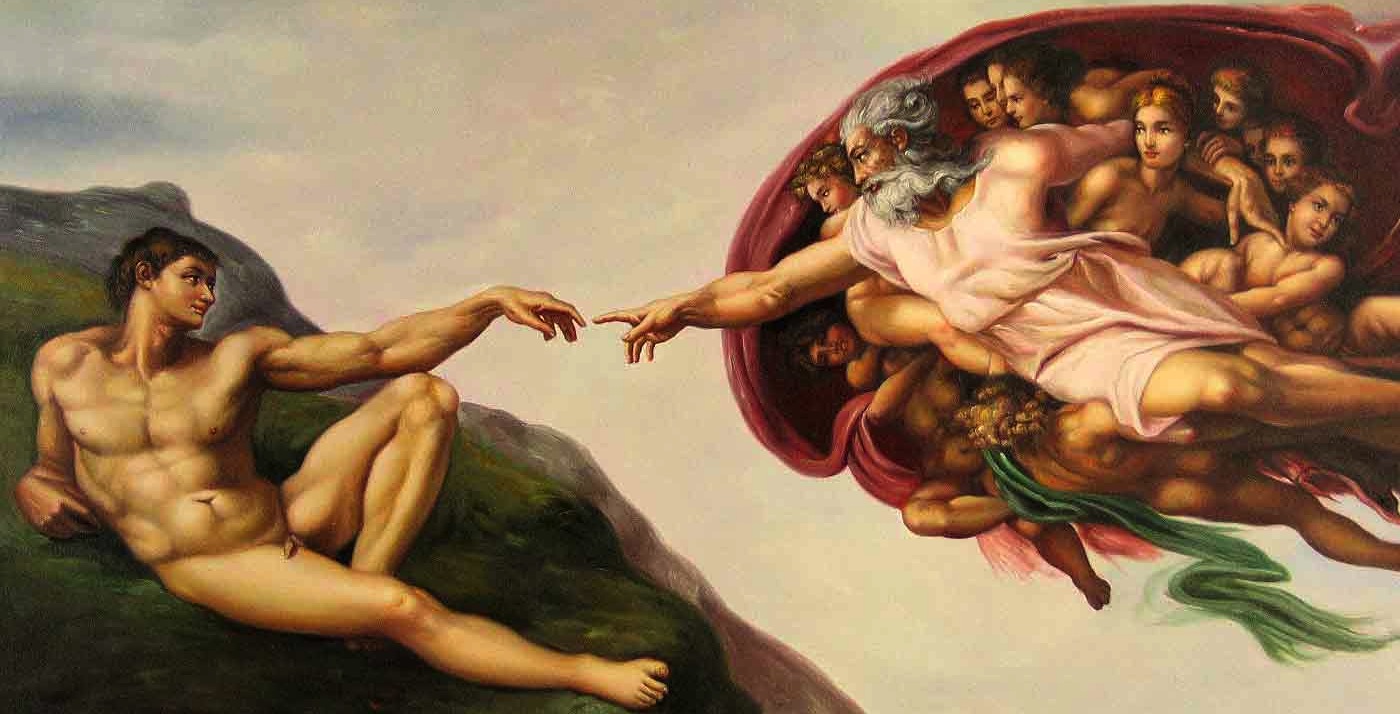
The Creation of Man (Michelangelo)

The Creation of Man (Michelangelo)

1 In the beginning was the Word, and the Word was with God, and the Word was God. 2 He was with God in the beginning.

3 Through him all things were made; without him nothing was made that has been made. 4 In him was life, and that life was the light of men. 5 The light shines in the darkness, but the darkness has not understood it. (John 1:1-5 – New International Version 1984)

I try not to quote too much scripture on this blog and will likewise keep it to a minimum as I complete my book, but I came across this quote last night and it suddenly clicked with me.

What I Believe
My core conviction, the belief that has driven me to write is that we are only part of a sea of consciousness and that “Universal Consciousness” is what we in the Abrahamic tradition have come to call God.

In the book I am using bleeding edge science mixed with, archaeologic discoveries and the occasional religious insights to make my case, so when I read the above quote it suddenly dawned on me that “the word” is consciousness! 

In the beginning there was only consciousness…and that was God (1+2). That consciousness (conscious observation) creates our reality (3) as quantum physics tells us. That the light or spark inside all humans is that light of consciousness(4). And finally, that whether we acknowledge it or not (the darkness) that light of God shines in us and through us into our space-time material world!

The Source
While I don’t (and never will) rely on The Bible as factual evidence of anything I feel that there are some stories, particularly in the old testament that give incredible insight to beliefs of a long lost civilization going back perhaps 15,000 years and more.

For the most part the Old Testament and Torah, are an amalgamation of many oral traditions passed down through the eons and brought together as a single work between 600 and 400 BCE during the Babylonian Exile period. While the New Testament is a hodgepodge of information spliced together by the early Christian Church which had it’s own political agenda. And in fact, many biblical scholars question that the Gospel of John was even written by John. Perhaps the true author was someone with a much deeper understanding of the way the Universe works and camouflaged it for a future generation to discover.

A ‘Nous’ Understanding
Many new scientific discoveries are pointing toward the idea of one consciousness. A consciousness that created and continuously creates the Universe and everything in it that we experience as “reality”. Juxtapose these new discoveries with the quote from the book of John and you may suddenly realize that we are coming out of the darkness, that the veil is lifting.

We Are All One


I find the current world paradigm of separation repugnant.

Here in Québec there is talk again of separating from Canada, thankfully no where near a majority (30%). When Palestine was separated in 1948 it was likewise the opposite direction we should have gone, but in that case it wasn’t up to the Palestinians to decide, Western powers decided for them.

What we really need is a movement toward ONEness…Like the Global Oneness Day October 24th.

Watch this message from Neale Donald Walsch