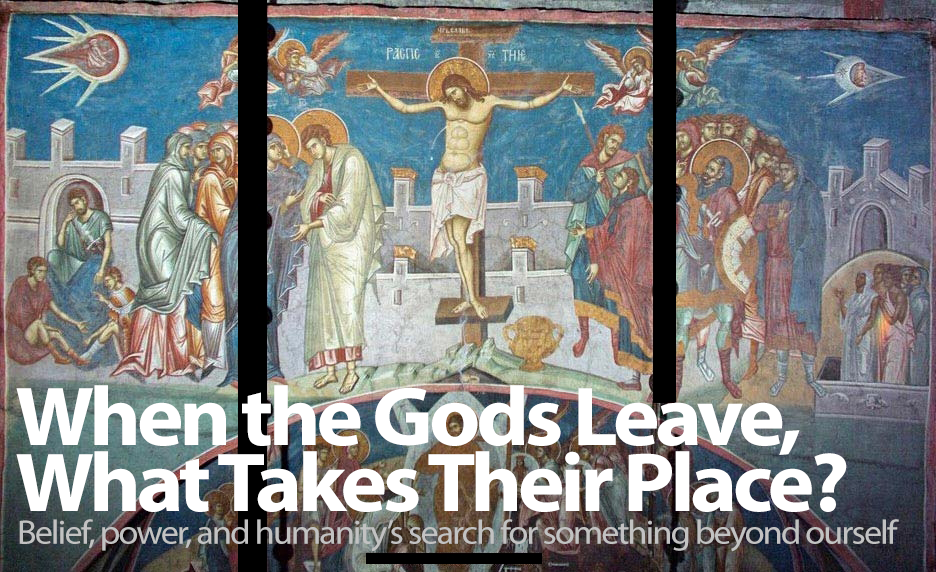
When the Gods Leave, What Takes Their Place?


LISTEN TO THE AUDIO VERSION

Two thousand years ago, the Greek philosopher Plutarch observed that you could find cities without walls, kings, or wealth…but not cities without gods.

Two thousand years later, the gods appear to be leaving.

The question is whether our need for them went with them.

Across much of the Western world, organized religion has been losing its hold. Churches that once stood at the centre of community life struggle to fill their pews. Increasing numbers of people describe themselves as having no religion at all. Institutions that once claimed enormous authority over questions of morality, meaning, death and eternity no longer command the automatic obedience they once did.

It would be easy to conclude that humanity is simply becoming less religious.

But perhaps something more interesting is happening.

Perhaps belief doesn’t disappear.

Perhaps it changes containers.

The Space Religion Occupied

For thousands of years, religion did considerably more than tell us what happened after we died.

It placed us inside a story.

It told us where we came from. Why we were here. What was expected of us. What existed beyond the visible world. Whether there was an intelligence greater than our own. Whether someone or something was watching.

Religion provided community, ritual and moral structure. But it also provided mystery.

And human beings seem remarkably uncomfortable living without mystery.

This doesn’t mean religion was created simply to control people. History is rarely that tidy. Belief can emerge sincerely among ordinary people while institutions subsequently discover that belief has another property:

It has power.

Ancient Rome provides an extraordinary example.

When Rome Changed Its Mind

For centuries, Christians periodically faced Roman persecution. Their refusal to participate in aspects of Roman religious life could be interpreted as defiance of the social and political order.

Then something remarkable happened.

Rome stopped trying to destroy Christianity and began embracing it.

Constantine legalized Christianity in the early fourth century and increasingly patronized it. Later in that century, under Theodosius I, Nicene Christianity became bound increasingly closely to imperial authority.

But Rome did not invent Christianity. By the time Constantine embraced it, Christian communities had flourished for centuries across the Eastern Mediterranean, including ancient traditions that would eventually form the foundations of Eastern Orthodox Christianity.

Rome’s great achievement may therefore have been something subtler than creating a religion.

It recognized the power of one that was already there.

Imperial authority became involved in Christian disputes. Councils helped define orthodoxy. Certain interpretations became authoritative while others were increasingly pushed outside the boundaries of acceptable belief. Christianity itself developed within the surrounding Greek and Roman world, absorbing its language, philosophy and cultural environment.

Over time, belief and institutional power became deeply intertwined.

The lesson isn’t necessarily that powerful people invent religions to control populations.

The more interesting lesson may be that institutions can recognize an emerging belief system, organize it, legitimize particular interpretations of it and eventually become authorities over it.

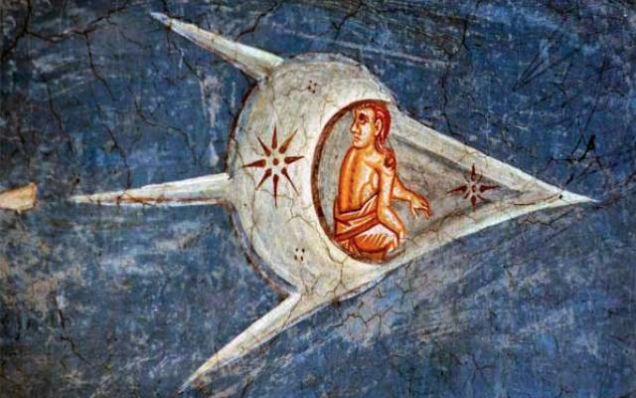
Which brings us, rather unexpectedly, to the sky.
Something Is Changing Above Us

For most of the modern era, UFOs occupied the cultural territory of science fiction, tabloid newspapers and conspiracy theories.

That has changed.

With the Pentagon’s latest release of previously classified UAP material, the sixth release of its kind in roughly five months, we are being given another glimpse into just how seriously parts of the U.S. government have investigated phenomena once dismissed to the fringes. The newly released material includes records connected to a secretive military program that commissioned studies into subjects as extraordinary as wormholes, exotic propulsion and the possible biological effects of unexplained encounters.

None of this proves extraterrestrials are visiting Earth.

That distinction matters enormously.

But something culturally important can be happening regardless of whether a single extraterrestrial spacecraft has ever entered our atmosphere.

Look at the questions increasingly surrounding the phenomenon.

Are we alone?

Is there an intelligence greater than ours?

Where do we come from?

Could another intelligence have been watching us?

Is reality larger than what we can perceive?

What happens when humanity finally discovers that it isn’t at the centre of everything?

Those aren’t merely scientific questions.

They are some of the oldest questions human beings have ever asked.

We once carried many of them into temples and churches.

Increasingly, we’re carrying them elsewhere.

A New Container

This doesn’t require a secret government plan.

In fact, that’s precisely what makes the possibility more interesting.

Rome didn’t need to invent Christianity to recognize its cultural power. Christianity was already there.

Perhaps modern institutions don’t need to invent our fascination with extraterrestrial intelligence either.

It is already here.

The important question therefore may not be whether governments are preparing us to believe in extraterrestrials.

It may be what happens if millions of people begin believing anyway.

Who interprets the phenomenon?

Who determines which information is credible?

Who possesses the secret knowledge?

Who decides what gets revealed?

And perhaps most importantly: who becomes the authority standing between ordinary people and something they cannot understand for themselves?

Those questions should sound strangely familiar.

Because we’ve asked versions of them before.

Perhaps the most interesting thing about the decline of organized religion isn’t that Western societies are abandoning belief.

Perhaps we’re watching belief migrate from churches and scriptures toward consciousness, the cosmos and the possibility that we are not alone.

Plutarch couldn’t imagine congressional hearings about unidentified objects moving through the sky.

But I suspect he would recognize the people watching them.

Because two thousand years later, humanity may still be doing what it has always done:

Looking upward.

Searching for something greater than ourselves.

Trying to understand our place in an enormous and mysterious universe.

Perhaps belief doesn’t disappear.

Perhaps it simply changes containers.
Consciousness Isn’t What You Think


LISTEN TO THE AUDIO VERSION

We’ve been asking the wrong question.

For decades—arguably centuries—we’ve tried to locate consciousness the same way we locate everything else: by dissecting it, measuring it, and trying to explain it.

We’ve scanned brains.
Mapped neural pathways.
Tracked electrical impulses firing in real time.

And yet… the one thing we’re trying to understand—the experience of being aware—remains just out of reach.

Because what if consciousness isn’t something we can find?

What if it’s something we’ve been standing in all along?

Look Closer

Modern thinking has trained us to believe that consciousness is a byproduct of the brain—a kind of side effect of complex computation. Neurons fire, patterns emerge, and somehow… awareness appears.

But there’s a problem with that model.

It assumes that consciousness comes after the process.

That thinking creates awareness.

But pause for a moment and look at your own experience.

Before you name something… you’re aware of it.
Before you analyze something… you’re aware of it.
Before a thought even forms… there is already awareness.

So which comes first?

If consciousness were just a product of thinking, then thinking would have to exist before awareness.

But it doesn’t.

Awareness is already there—quiet, constant, and undeniable—before the first thought arrives.

And yet, we’ve built an entire worldview that treats thinking as primary… and being as secondary.

That may be the fundamental error.

Turn It Around

There’s another way to look at this.

Instead of seeing consciousness as something the brain produces, what if we saw it as the field in which all experience happens?

Not an object.
Not a function.
Not a thing.

But the context.

Think about it this way.

Every thought you’ve ever had appears to something.
Every emotion arises within something.
Every perception—sound, sight, sensation—shows up in a kind of open space of awareness.

We don’t usually notice it because we’re so focused on the content.

The thoughts.
The noise.
The story.

But the space in which all of that happens?

That’s consciousness.

And it doesn’t come and go the way thoughts do.

It’s there when you’re focused.
It’s there when your mind is quiet.
It’s there in the middle of chaos… and in moments of stillness.

Which raises a powerful possibility:

Consciousness isn’t something you generate.

It’s something you are participating in.

Notice This

Imagine two people listening to music.

The first is analyzing it.

Breaking down the chords.
Identifying the structure.
Thinking about what comes next.

The second is simply… listening.

No commentary.
No analysis.
Just direct experience.

Same song.

Completely different relationship to it.

Now apply that to your life.

Most of us are living in the first mode—constantly interpreting, labeling, evaluating.

We’re thinking about our experience instead of actually being in it.

But every once in a while, something breaks through.

A moment of awe.
A deep conversation.
A quiet walk where everything feels… present.

In those moments, thinking fades into the background.

And what’s left isn’t emptiness.

It’s clarity.

Connection.

A sense that you’re not separate from what’s happening—you’re part of it.

That’s not the absence of consciousness.

That’s the fullness of it.

Now Try This

So here’s a simple shift to experiment with.

For the next few moments today, don’t try to understand your experience.

Don’t analyze it.

Don’t improve it.

Just notice it.

The sound around you.
The feeling in your body.
The fact that you’re aware of both.

No need to change anything.

Just recognize that awareness is already here—before the next thought, during it, and after it.

Because the goal isn’t to stop thinking.

The goal is to stop mistaking thinking for the whole story.

When you do that, something subtle but powerful happens.

You move from observing life…
to actually being in it.

And from that place, a different kind of understanding begins to emerge.

Not constructed.

Not forced.

But discovered.

A Brain Test


opNnoOx

[Click on the above picture to open it]

This is not just a parlour trick but a way to demonstrate how what we think is reality may not be correct.

Each of your eyes has a blank spot, where the optic nerve is attached…your brain fills those 2 blank spots in as best as it can based on several things. Remember, what is received at the back of your eye is actually upside down and it’s the brain’s job to flip it 180 degrees in order for you to function.

6758942_orig

Based on the above demonstration, what other things do you think the brain is inadvertently “correcting” for us?

INTERVIEW: Graham Hancock Speaks Out


Graham-Hancock

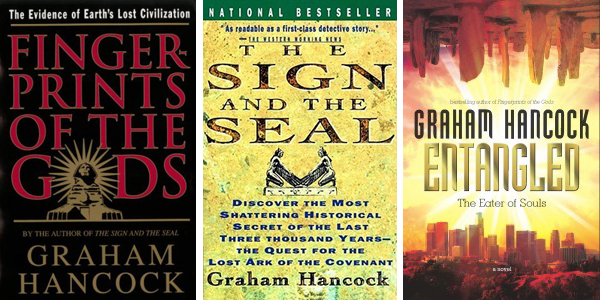
Graham Hancock is one of the most eminent researcher-writers on true world history. His book Fingerprints of the Gods verified my suspicion [1] that we are not the world’s first great civilization and helped propel me down a new path in my journey. He has also become an outspoken proponent of the use of Ayahuasca as a way to open the mind and expand the consciousness.

When William Henry announced that Graham would be speaking at the Revelations Symposium in Nashville, I signed up and booked my flight.

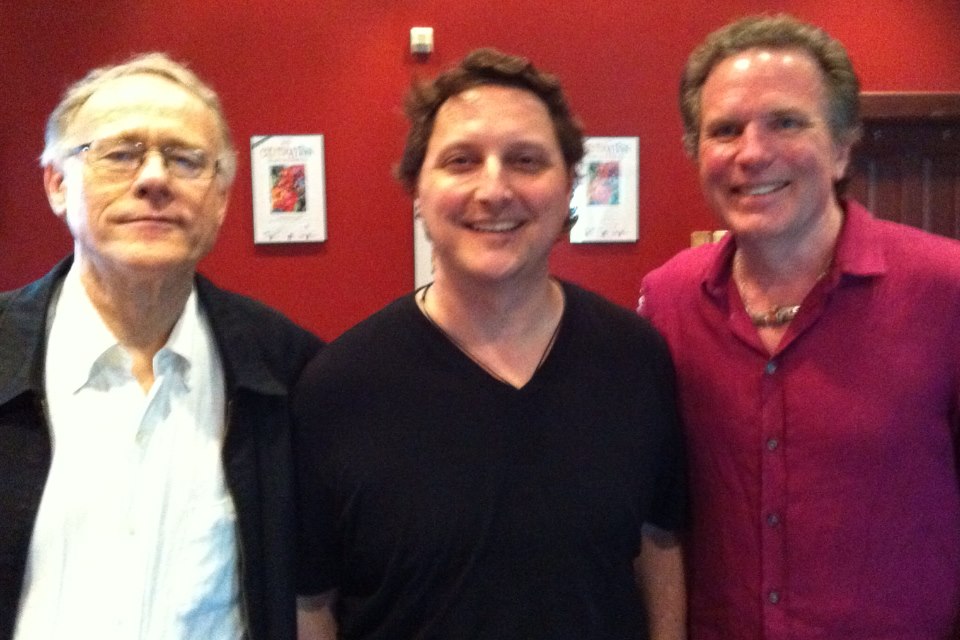
Graham Hancock, David Boullata and William Henry

Graham Hancock, David Boullata and William Henry (l-r)

We spent 3 days in the intimate beauty of the Scarritt-Bennett Center listening and learning from Graham, William and Whitley Strieber. Then as the chairs were being folded and with only minutes before leaving for the airport, he graciously agreed to sit down with me and field a few questions:

1. In regards to your first book The Sign & the Seal do you think we should insist on examination of the artifact at Axum? Would we ever be allowed?

2. In Fingerprints of the Gods you proved that we know a lot less than we think we know about the history of mankind on Earth. What for you is the critical information that needs to be taught to our kids, to the general population…and how will that change the way we see ourselves today?

3. I find Zecharia Sitchin’s research intriguing but I’m not totally convinced. How much credence do you hold to the idea that we may have been genetically modified slaves of an advanced alien species?

4. According to Israeli archeologists Amnon Ben-Tor and Sharon Zuckerman there is no physical evidence for The Exodus as told in The Bible [2] (click ‘transcript’)…suggesting that perhaps the Ark of the Covenant didn’t come from Egypt but was already in Jerusalem. Might the Ark hold a crucial piece of Zecharia Sitchin’s alien landing beacon?

Hancock-Books

5. Why did you decide that writing fiction would be an appropriate move for your writing career?

6. In Entangled, you introduce the idea of magic mushrooms, what The Clan call “Demon Penises” and the Uglies call “Little Teachers”. Is psilocybin a hallucinogen or a key to open a door to another dimension?

7. What do you think the role of psychedelics were in ancient civilizations…and how do you think they can help our modern, disjointed world?

8. What if anything do you think will come of the TEDx Talks controversy? A more open discussion on “what is science”….?

9. Are you a spiritual anarchist?

10. Who or what is God?

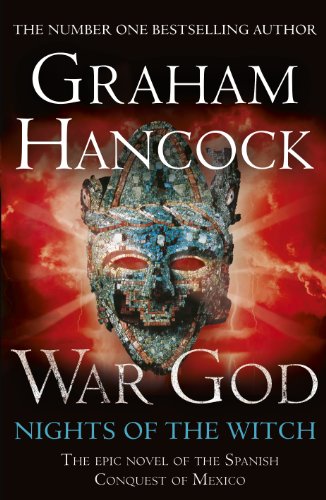
Graham Hancock’s new book War God will be available through Amazon UK on May 30th and later this year through Amazon Canada on August 13. You can likewise read a few sample chapters for free at the website War-God.com


For an updated list of Graham’s speaking engagements around the world click here.


The Essence of a Cup


empty-cup

I’VE COME TO UNDERSTAND that the essence of a cup is not the cup itself, it is the space within the cup. It’s the space that defines it’s purpose…to hold something without form.

Likewise, I believe the essence of the Universe’s smallest particles is not it’s electrons, protons, neutrons, etc. Their essence, indeed their purpose has to do with the space within them.

It’s About Space
If we consider the atom is 99.99% empty space perhaps we would see that our research at CERN is looking in the wrong place to find the so-called God Particle known to scientists as the Higgs boson. And that perhaps the God Particle isn’t even a particle at all!

Ask the Right Question
As a thinking spiritualist I find it hard to watch as science continues to overlook the most obvious question…what’s with all the space? Case in point this recent article: “A question of spin for the new boson” by James Gillies.

Where is Beauty?
To quote from Alan Watts’ book Become What You Are: “A symphony is not explained by a mathematical analysis of it’s notes; the mystery of a woman’s beauty is not revealed by a postmortem dissection; and no one ever understood the wonder of a bird on the wing by stuffing it and putting it in a case.” (p.61)

The purpose of the Universe and everything in it cannot be discovered by analyzing the cup alone. The key to understanding is to ask the right questions and look in the right place for the answer.

Alan Watts, Love Everything


I just discovered this amazing little video and wanted to share it here as a thought provoker as more and more people are drawn toward The Nous Age and what it is. I have never felt the peace I feel while looking up, out into the Universe with my Meade telescope. It’s the greatest show on Earth!

God is Consciousness


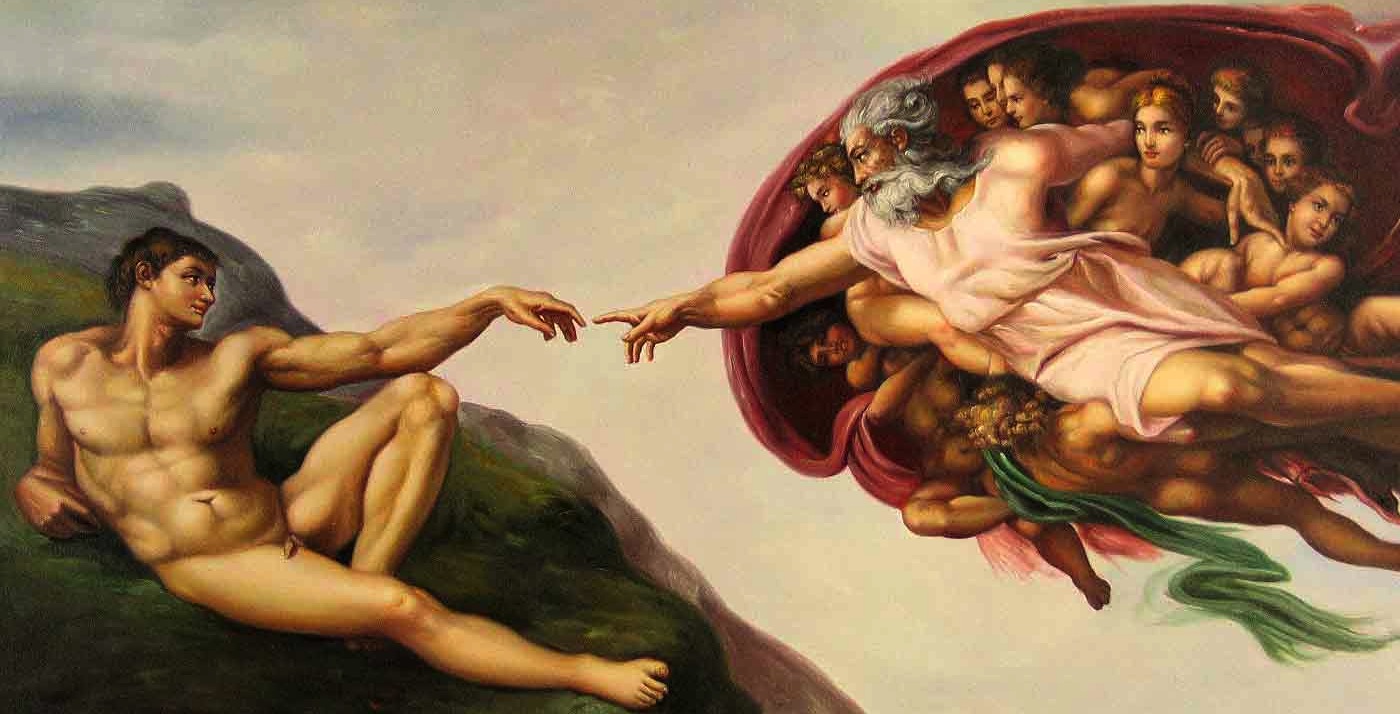
The Creation of Man (Michelangelo)

The Creation of Man (Michelangelo)

1 In the beginning was the Word, and the Word was with God, and the Word was God. 2 He was with God in the beginning.

3 Through him all things were made; without him nothing was made that has been made. 4 In him was life, and that life was the light of men. 5 The light shines in the darkness, but the darkness has not understood it. (John 1:1-5 – New International Version 1984)

I try not to quote too much scripture on this blog and will likewise keep it to a minimum as I complete my book, but I came across this quote last night and it suddenly clicked with me.

What I Believe
My core conviction, the belief that has driven me to write is that we are only part of a sea of consciousness and that “Universal Consciousness” is what we in the Abrahamic tradition have come to call God.

In the book I am using bleeding edge science mixed with, archaeologic discoveries and the occasional religious insights to make my case, so when I read the above quote it suddenly dawned on me that “the word” is consciousness! 

In the beginning there was only consciousness…and that was God (1+2). That consciousness (conscious observation) creates our reality (3) as quantum physics tells us. That the light or spark inside all humans is that light of consciousness(4). And finally, that whether we acknowledge it or not (the darkness) that light of God shines in us and through us into our space-time material world!

The Source
While I don’t (and never will) rely on The Bible as factual evidence of anything I feel that there are some stories, particularly in the old testament that give incredible insight to beliefs of a long lost civilization going back perhaps 15,000 years and more.

For the most part the Old Testament and Torah, are an amalgamation of many oral traditions passed down through the eons and brought together as a single work between 600 and 400 BCE during the Babylonian Exile period. While the New Testament is a hodgepodge of information spliced together by the early Christian Church which had it’s own political agenda. And in fact, many biblical scholars question that the Gospel of John was even written by John. Perhaps the true author was someone with a much deeper understanding of the way the Universe works and camouflaged it for a future generation to discover.

A ‘Nous’ Understanding
Many new scientific discoveries are pointing toward the idea of one consciousness. A consciousness that created and continuously creates the Universe and everything in it that we experience as “reality”. Juxtapose these new discoveries with the quote from the book of John and you may suddenly realize that we are coming out of the darkness, that the veil is lifting.